Tokyo, Singapore, Munich: What Regeneration Solution Does ARCHIBIO Bring to the World?

Jump to section
The globalization of a technology is not only about how far it has traveled, but also about where in industry it is seen, discussed, and tested.
In October 2026, ARCHIBIO took its bio-enzymatic recycling technology from Tokyo to Singapore and then to Munich in less than two weeks, completing a “global roadshow” across three time zones.
Three events, three industry contexts, pointing to the same proposition: bio-enzymatic recycling is moving from “feasible” to “accessible.”
Tokyo
Highly-functional Material Week
Bringing enzymatic regeneration into the high-performance materials conversation
From September 30 to October 2, ARCHIBIO participated in Highly-functional Material Week in Tokyo, Japan, the country’s largest comprehensive exhibition of advanced materials and technologies.
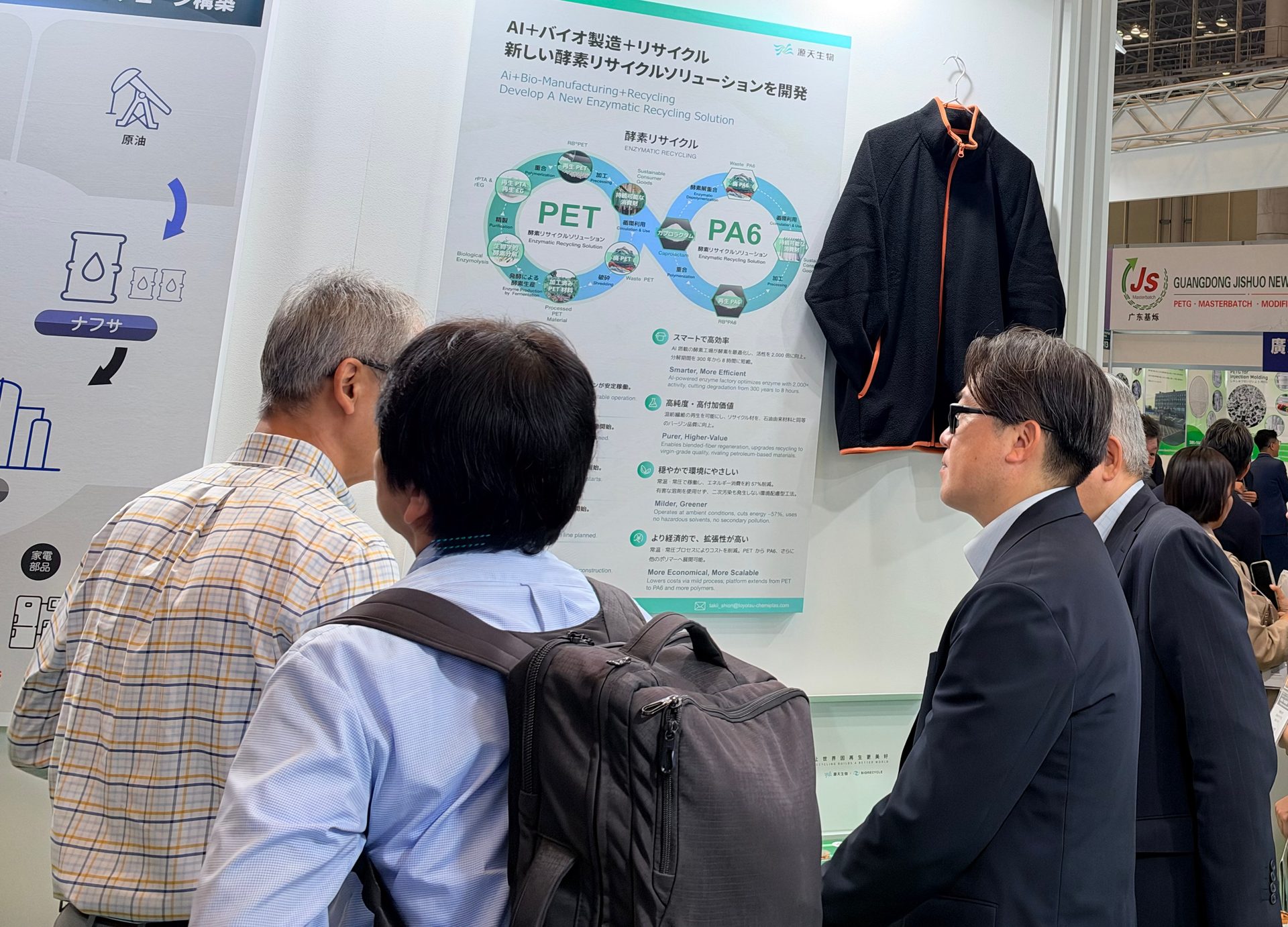
ARCHIBIO displayed its rPTA, rEG, and RB®PET series products based on bio-enzymatic recycling.
Japan is an important technology highland for high-performance polyester and engineering plastics worldwide, and a key stop in ARCHIBIO’s internationalization strategy. Previously, ARCHIBIO received a strategic investment from Toyota Tsusho (Shanghai). Leveraging its automotive supply chain resources and accumulated experience in the Japanese market, ARCHIBIO is entering the automotive supply chain system and promoting the entry of rPTA monomer into Japan’s high-end polyester processing chain.
Highly-functional Material Week brought ARCHIBIO face to face with the audience it needs to engage in the next stage: the question is no longer “whether to use recycled materials,” but “whether recycled materials can meet high-performance standards.” Bio-enzymatically recycling products have shown the potential to outperform virgin PET in indicators such as trace organic compounds. This step of “entering the room” is itself a statement of technical confidence.
Singapore · Be the Change Summit 2026
Confronting the “from molecule to market” gap
From October 1 to 2, Be the Change Summit 2026, hosted by the Singapore Fashion Council, was held in Singapore under the theme “Fashion Futures: Resource Stewardship and Business Resilience.”
ARCHIBIO participated in the discussion on “From Molecule to Market: Delivering Next-Generation Materials at Scale.”
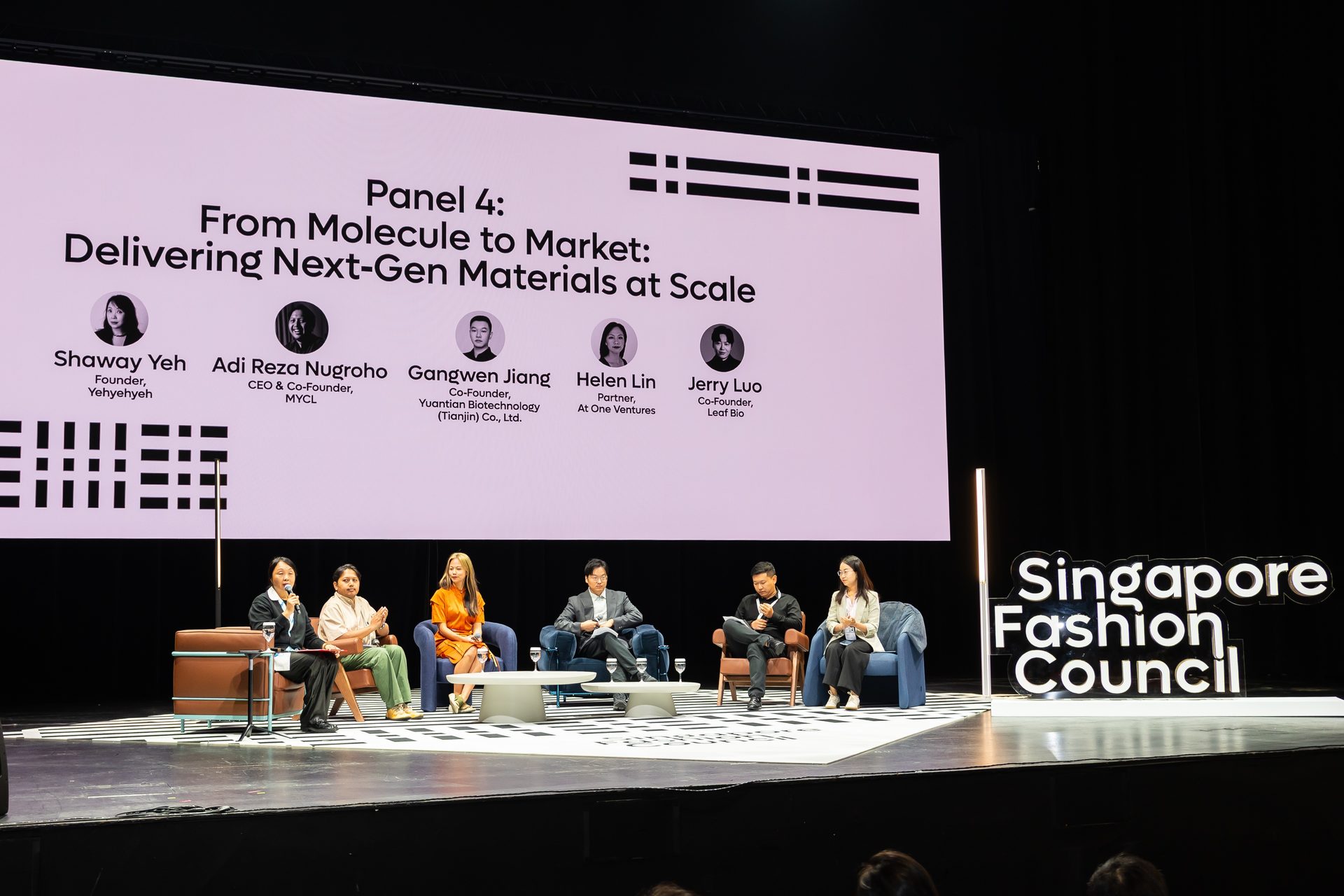
The framing of this topic is revealing in itself: what it seeks to bridge is the “Commercialization Gap” for next-generation textile materials. After a technology leaves the lab, what often blocks scaled implementation is not the molecule itself, but feedstock consistency, the cost curve, supply chain integration, and brand validation cycles.
What ARCHIBIO shared was precisely China’s practice on this gap: enzyme activity increased nearly 2,000-fold, and enzymatic hydrolysis time compressed from hundreds of years under natural conditions to within 8 hours; an all-aqueous system and room-temperature, ambient-pressure reaction give production costs room to compete with virgin materials. The world’s first 6,500-tonne-per-year continuous production line is about to be commissioned, while a 100,000-tonne line is being advanced in parallel.
The value of the Singapore dialogue lies in this: as Southeast Asian and global brands begin to seriously discuss “how next-generation materials can scale,” ARCHIBIO has capacity and cost answers that can be put on the table.
Munich · PERFORMANCE DAYS
Debuting at the bellwether for functional textiles
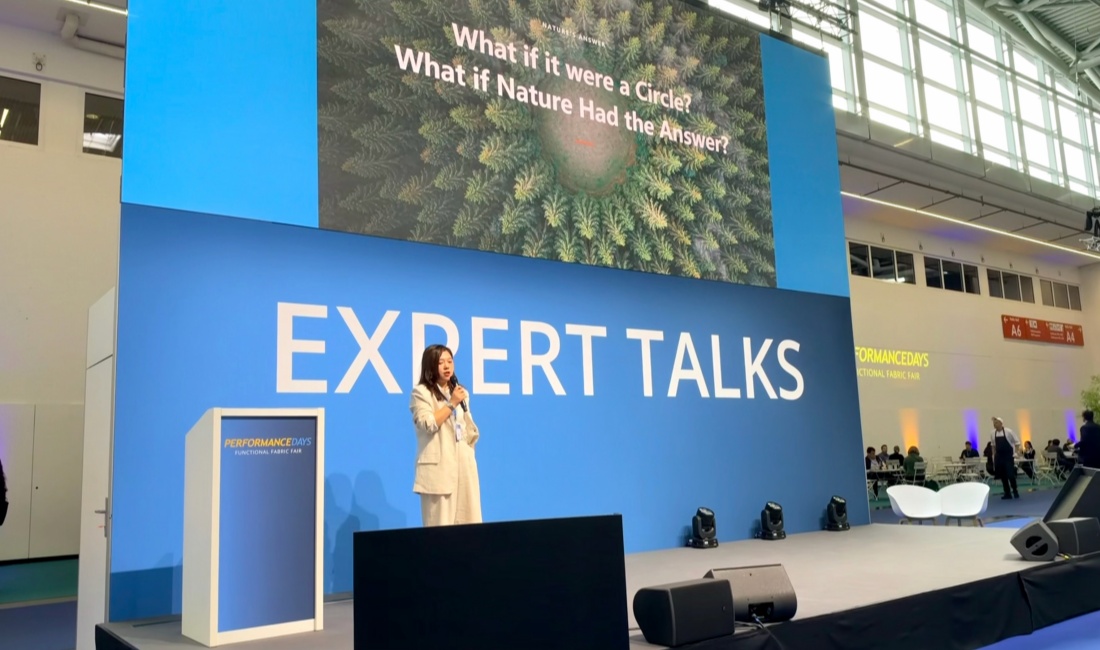
From October 13 to 14, ARCHIBIO participated for the first time in PERFORMANCE DAYS in Munich, Germany, a landmark exhibition in the global functional textiles field.
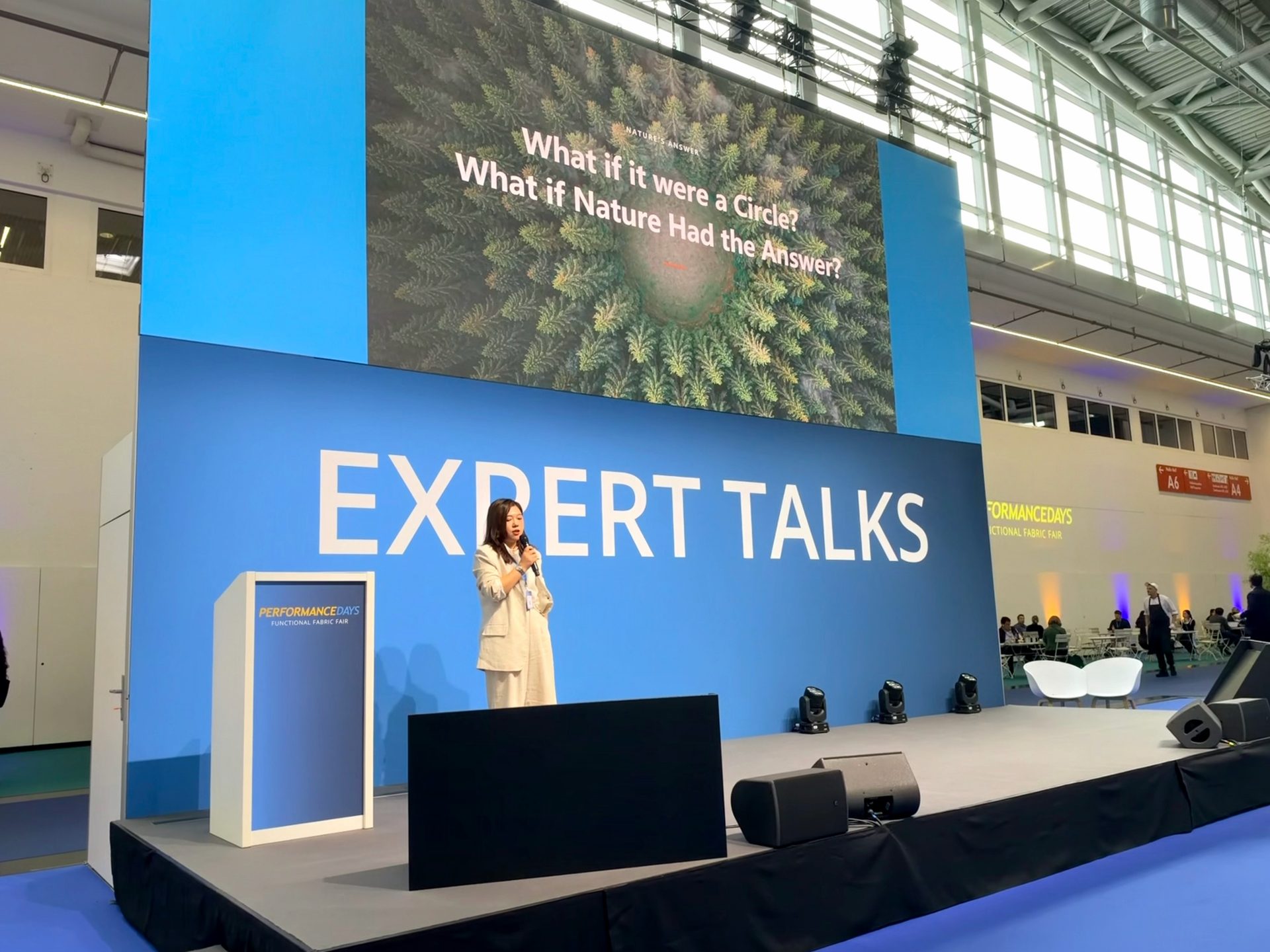
ARCHIBIO did not limit itself to booth display. Through two roadshows, it systematically explained the principles, product performance, and industrialization progress of bio-enzymatic recycling technology, moving bio-enzymatic recycling from “product display” to “in-depth technical presentation.” The European functional textile supply chain has the strictest requirements for “performance,” and what enzymatic regeneration must prove is precisely that regenerated materials do not sacrifice performance.
Tokyo, Singapore, and Munich are not adjacent on the industrial map, yet together they outline the implementation coordinate system for bio-enzymatic regeneration:
Tokyo answers “Can it be used?”—whether high-performance materials systems accept enzymatic regeneration products;
Singapore answers “Can it scale?”—how the commercialization gap can be crossed, and whether capacity and cost are in place;
Munich answers “Will end users accept it?”—whether enzymatic regeneration can withstand the performance standards for functional textiles.
ARCHIBIO’s simultaneous presence at these three coordinates sends a clear signal: competition in bio-enzymatic recycling has moved from the laboratory metric of “enzyme activity level” to a systematic stage involving capacity, cost, supply chain, and global brand validation.
ARCHIBIO has built the world’s first 300-tonne-per-year pilot production line, its 6,500-tonne industrialization project has entered the implementation stage, and it plans to scale up step by step to 100,000 tonnes. While the enzymatic recycling industry is still discussing “when commercialization will happen,” ARCHIBIO is already answering, across three continents at the same time, “the next question after commercialization”: what ARCHIBIO brings to the world is a next-generation polyester circular solution centered on bio-enzymatic technology, supported by scaled capacity, and channeled through global industrial collaboration.